My priorities and proposals

A number on every promise. A report every quarter.

I’ll report on these every quarter. See the scorecard 

At a glance: what changes for you

  • 1. Health care you can get a family doctor sooner, and less waiting for a hospital bed, a scan or a planned surgery.
  • 2. Homes people can afford more homes get finished, including family-sized ones, which eases rents over time.
  • 3. Cost of living less provincial income tax once the lowest rate and indexing are restored, with lower-income taxpayers protected by the credit.
  • 4. A downtown that works a downtown where people get help and businesses stay open, and where you feel safe walking on Pandora.
  • Transport and BC Ferries fewer sailings between Swartz Bay and Tsawwassen lost to breakdowns, and more certainty on fares if you travel often.
  • Responsible spending a provincial budget you can check line by line.

Also on this page: Also for this riding · How I'll report to you

Each promise below says what it means for you. “Details and sources” opens the full text, figures and links. Every one is my own position.

How I work

I'm an engineer: I start with the problem, measure it, fix it and report the result. Every promise on this page is my own position:

  • My position mine, with the source of each figure linked in its details.
More about how I work and the sources

I'm an engineer. I start with the problem, not the ideology. I measure it, fix it, and report the result. Below are the four things neighbours raise with me most, what I'll push for, and how you'll know if it worked. Two supporting sections follow: transport and BC Ferries, and responsible spending.

I'm running to be the MLA for Victoria–Beacon Hill. Every proposal on this page is my own position, with the source of each figure.

1. Health care you can get

What changes for you: a family doctor sooner, and less waiting for a hospital bed, a scan or a planned surgery.

In practice (5)
  • A doctor or nurse licensed in Alberta could get a B.C. licence within a week of a complete application.
  • If your MRI, CT scan, cataract, hip or knee surgery is overdue, your doctor can book it at an approved clinic, and the Province pays the clinic. You show your health card and pay nothing.
  • Hospital beds free up as seniors move into care beds, so people in emergency get a bed sooner.
  • Fewer ER closures, because more shifts are staffed.
  • Doctors spend less time on forms and more with patients, and you can see one in the evening or on a weekend.
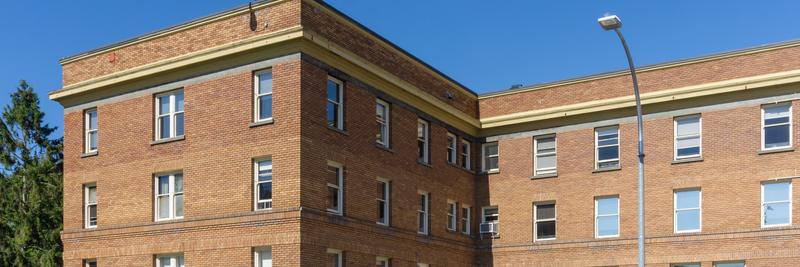
Brick wing of Royal Jubilee Hospital in Victoria under a blue sky

Out-of-province doctors and nurses, licensed in a week

For you: 388 days is today's median wait for a family doctor in the Island Health region. More doctors and nurses licensed here, sooner, is how you get one faster. My position

Details and sources (2)

Doctors and nurses from other provinces, licensed within a week. Recognize any doctor or nurse already licensed in another province within 5 business days of a complete application, fees waived. Nova Scotia has done it since 2023 (my position; Nova Scotia Patient Access to Care Act, 2023).

In the Island Health region, the median wait for a family doctor on the provincial list is 388 days (B.C. Health Minister, Hansard, 28 Apr 2026). More doctors allowed to practise here, sooner, is how that wait comes down.

Less paperwork, more time with patients

For you: 9.1 hours a week: what doctors spend on paperwork. Cutting it frees time for appointments, and more of your visit goes to you. My position

Details and sources (1)

Cut doctors' paperwork by 10% in 2 years, measured by B.C. doctors' answers to the national paperwork survey. In that survey, doctors across Canada said they spend 9.1 hours a week on paperwork on average, and that 46% of it is unnecessary for a doctor to do (my position; Doctors of BC, Jan 2026).

See a doctor without taking time off work

For you: See a doctor in the evening or on a weekend, without losing a shift or a day's pay. My position

Add evening and weekend clinic hours on the South Island (my position).

Overdue scan or surgery? The Province pays

For you: 40.7% of Island Health's scheduled surgeries waited past their medical benchmark. Once your scan or surgery is overdue, an approved clinic does it: you show your health card and pay nothing. My position

Details and sources (2)

If your scan or surgery is overdue, the Province pays for it at an approved clinic. When your wait passes the medical benchmark (the longest wait doctors consider acceptable for that procedure), your doctor can send you to a pre-approved clinic, in B.C. or out of province, and the Province pays the clinic a set fee.

Start with MRI and CT scans, cataracts, hips and knees (my position). You show your health card and pay nothing. In the year to March 2026, 40.7% of Island Health's scheduled surgeries waited longer than their benchmark; its own target is no more than 56.7% (Island Health, March 2026).

Across B.C. in calendar 2025, 35% of completed surgeries that had a clinical benchmark exceeded that benchmark (98,545 of 282,887) (B.C. Ministry of Health FOI HTH-2026-60818, Apr 2026, via SecondStreet). That is the share I'll report every quarter, alongside Island Health's.

What publicly paid clinics did in Saskatchewan

For you: 26.5 weeks to 14.2: Saskatchewan's median surgery wait after 4 years of this, with surgeries still publicly insured. Less time waiting in pain.

Details and sources (1)

Saskatchewan's surgical initiative paid private clinics for publicly insured surgeries. In 4 years, the median wait from referral to treatment fell from 26.5 weeks to 14.2, and 75% fewer people waited more than 3 months for surgery. In 2012, the procedures done in the clinics cost 26% less than they would have in hospital (Fraser Institute, 2024).

Care beds for seniors free up hospital beds

For you: 16% of Island Health hospital days go to patients ready to leave (target: 14%). Seniors get the right care bed, and you get a bed out of emergency sooner. My position

Details and sources (1)

Free up hospital beds: get seniors into care beds. At Island Health, 16% of hospital patient days are in alternate level of care: patients ready to leave hospital but still there, most of them waiting for a long-term care bed.

Its own target is 14% (Island Health, March 2026). Each bed freed is a bed for someone waiting in emergency. I'll publish that number by hospital every month and push for long-term contracts for care beds on the South Island (my position).

Emergency rooms that stay open

For you: About 2,400 temporary ER closures in B.C. from 2023 to 2025. Staffed shifts keep your emergency room open when you or your family need it. My position

Details and sources (1)

From 2023 to 2025, B.C. recorded about 2,400 temporary ER closures, and at least one emergency department was closed on more than 900 of 1,095 days (The Province analysis of Ministry of Health data, Jul 2026). An ER stays open when every shift is staffed. Licensing doctors and nurses from other provinces within a week helps fill those shifts. I'll report every quarter whether closures fall (my position).

A bed sooner when you're admitted from emergency

For you: 15 hours is today's median wait for a ward bed after admission from emergency; Island Health's target is 10. Less time on a stretcher in the hallway. My position

Details and sources (1)

You have already been admitted. You are waiting for a ward bed. The bed is often already in the building. What is missing is a nurse to staff it, and a reason for the hospital to open it. Today the hospital gets a fixed budget for the year.

Twenty more admissions do not bring twenty more payments, so the next patient is a cost. A closed bed protects the budget. A longer wait protects it too. I will vote to staff the medical beds, and to pay the hospital a set amount for each patient it treats, higher if the person is sicker.

The next patient is then how the hospital gets paid. Moving you from the hallway to the ward, and treating more people this year, is in its interest. That is the incentive to shorten the wait. A bed only helps if there are staff to run it, so the hospital also has a reason to plan staff and beds together.

This is not a funding cut. It is the same money, allocated so it treats more people. Seniors waiting in hospital for a care bed are a separate problem, dealt with in the point on freeing up hospital beds. A hospital should not be paid the same for every extra day such a senior stays.

This payment is for the next patient, once the bed is free. Island Health's own target is a median of 10 hours from triage to an inpatient bed at Royal Jubilee and at Victoria General. As of March 2026 the median across its sites was 15 hours.

If that number does not fall, the vote did not work (Island Health, March 2026; my position, scorecard line 8).

More planned surgeries on time

For you: Your planned surgery on time: less time living with pain, off work or waiting. My position

Vote to pay for extra operating-room time, public and non-government (my position, scorecard line 9).

How you'll know: scorecard lines 8, 9 and 10 (the emergency wait for a bed, planned surgeries past their benchmark, and the wait for a family doctor), every quarter, within 30 days of quarter-end. I'll also publish how many people are waiting for a family doctor in each Victoria-area primary care network, and for how long. Every month, I'll publish each hospital's share of patient days in alternate level of care.

Background: why, how and what it costs

Why: Health care has been managed, not fixed. Since 2018 the Province has run a Primary Care Strategy and committed more than $672 million to it for 2025-26 alone (B.C. Ministry of Health, Aug 2025). About 1 in 4 British Columbians (24.7%) had no family doctor or nurse practitioner in June 2025, and 68.6% of the primary-care positions the Province had approved were filled in 2024/25 (Ministry of Health records, via The Canada Report, 16 Jul 2026).

In 2025, the median wait from a family doctor's referral to treatment in B.C. was 32.2 weeks, 3.6 weeks longer than the Canadian median of 28.6, but still the second-shortest in Canada, after Ontario (19.2 weeks) (Fraser Institute, Waiting Your Turn 2025, Dec. 2025).

It was B.C.'s longest wait since the Fraser Institute began measuring in 1993 (Fraser Institute, 17 Aug 2026). Waits are the test: I check whether things work and publish the result every quarter. Doctors' pay, clinic rules and paperwork are set by the Province.

How the extra appointments would be delivered:

  • Staff: extra hours need staff first. Work with physicians, nurse practitioners, nurses and physician assistants to see more patients per practice, and expand the programs that fill positions in high-need communities (my position).
  • Clinic capacity: long-term contracts with publicly funded non-government clinics, so they can buy equipment and recruit staff (my position).
  • Less administration: modern tools that cut paperwork, and a review to find administrative savings and move the money to front-line staffing (my position).

What shortens waits: publishing the lists is the check, not the fix. The fixes are staffed beds, paying hospitals for the patients they treat, extra operating-room time, and the wait-time backstop: when your wait passes the medical benchmark, the Province pays for your care at an approved clinic. Every quarter, the report shows whether the median wait, the share of surgeries past their benchmark and ER closures are going down.

Cost: cutting paperwork is a rule change, not a new program. Where a change needs new staff or clinic time, I'll publish the cost when Ministry of Health or Island Health figures exist. I won't invent a number.
Tracked on the scorecard: 8. Emergency wait for a bed · 9. Time to planned surgery · 10. A family doctor

Back to the summary

2. Homes people can afford

What changes for you: more homes get finished, including family-sized ones, which eases rents over time.

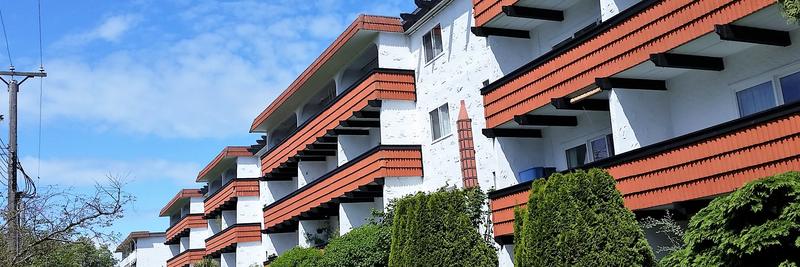
Low-rise apartment building with red balconies on a Fairfield street

Approve homes in months, not years, with fixed deadlines for rezoning, development and building permits. If city hall doesn't give a clear yes or no in time, the Province issues the permits

For you: Fixed deadlines for permits: homes get built sooner, which eases rents over time. My position

(my position).

Lower fees and paperwork on new homes

For you: Every fee and form on a new home ends up in its price or rent. Cutting them lowers the cost passed on to you. My position

Lower the fees and paperwork that add to the cost of every new home (my position).

How you'll know: scorecard line 3 (net new homes against Victoria's housing target, and how many have three or more bedrooms; annual, with building-permit counts every quarter) and line 4 (rental vacancy, with three-bedroom units shown separately; annual, published each December, with completions as the quarterly stand-in). I'll also publish permit times for every municipality in the region, as a check on approvals.

Background: why, how and what it costs

Why: Homes got more expensive while fewer got built. The average two-bedroom rent in the Victoria area was $2,120 in 2025, up 5.1% in a year (CMHC Rental Market Report, Fall 2025). Housing starts in B.C. were down 9.3% this year to July (B.C. First Quarterly Report, Sept 2026). Much of what slows and adds cost to new homes is set by the Province.

A permit is not a home: permit times alone don't show whether housing got more affordable. Faster approvals count when they turn into finished homes, lower rents and more family-sized units, so I'll judge them on lines 3 and 4. In 2025 the Victoria-area vacancy rate rose to 3.3%, the highest since 1999, and CMHC said vacancy rose significantly downtown and in Saanich, largely because of new rental supply there (CMHC, Fall 2025). Family-sized rentals are still the scarce stock.

Trade-offs and who decides: faster approvals mean less municipal control. The Province sets the zoning floor, the building code and tenancy law; cities issue the permits (What the Province controls).

Tracked on the scorecard: 3. New homes, and what kind · 4. Finding a rental

Back to the summary

3. Cost of living

What changes for you: less provincial income tax once the lowest rate and indexing are restored, with lower-income taxpayers protected by the credit; and a public list to check every claimed saving. How much depends on your income and credits.

The Root Cellar green grocer at Cook and Oxford streets, in Cook Street Village, at dusk

Restore the lowest provincial income-tax rate to 5.06%

For you: 5.60% back to 5.06% on the first $50,363 of taxable income: less provincial tax on the first dollars you earn. My position

(my position, scorecard line 1).

Restore inflation indexing

For you: Tax brackets rise with prices again, so a raise that only keeps up with inflation doesn't push your tax up. My position

(my position, scorecard line 1).

Keep the enhanced B.C. tax reduction credit

For you: Lower-income taxpayers keep the enhanced credit, so they don't pay for the rate cut. My position

Keep the enhanced B.C. tax reduction credit, so lower-income taxpayers aren't asked to fund the reversal (my position, scorecard line 1).

A public, line-by-line list of savings

For you: Every claimed government saving is listed line by line, so you can check it yourself. My position

Publish a verifiable, line-by-line list of government savings, with new extra spending matched by a cut somewhere else (my position, scorecard line 2).

No vote for new or higher taxes

For you: No new provincial tax and no higher provincial tax rate gets my vote. You can hold me to it on the scorecard. My position

Vote no on any bill that raises a provincial tax rate or creates a new tax (my position, scorecard promise 2).

Ferry fares

For you: If you take the ferry often, you get a say on a monthly flat fee, for more certainty on what you'll pay. My position

consult commuters and other frequent users on a monthly flat-fee program or other measures (my position; see Transport and BC Ferries below).

Timing and funding: no year or cost has been published for these changes, and I won't print one. I'll vote for them in a budget that says when they take effect and how they are paid for.

How you'll know: scorecard line 1 (the rate, indexing and the credit; annual, from the B.C. tax tables and the budget) and line 2 (the savings list; every quarter, from the government's Quarterly Reports).

Background: why, how and what it costs

Why: Government made life more expensive. For 2026 the lowest provincial income-tax rate went from 5.06% to 5.60%, on the first $50,363 of taxable income, and indexing of tax brackets and credits is paused for 2027 through 2030 (B.C. Ministry of Finance, Budget 2026 tax changes).

Effects differ between households: the same budget raised the maximum B.C. tax reduction credit by $115, to $690, and raised the rate used for the basic personal tax credits to 5.60% (same source). The Province says the average taxpayer pays $76 more in 2026, while more than 40% of taxpayers come out ahead once the higher tax reduction credit is counted (Budget 2026 highlights). That is why I'd keep the credit when the rate comes back down.

A balanced budget is not a saving on your next pay cheque. It is how you can check that these commitments are paid for. See Responsible spending below.

Cost: no cost has been published for restoring the rate and indexing, and I won't print a figure of my own.

Tracked on the scorecard: 1. Tax on your first dollars · 2. A public savings list

Back to the summary

4. A downtown that works

What changes for you: a downtown where people get help and businesses stay open, and where you feel safe walking on Pandora.

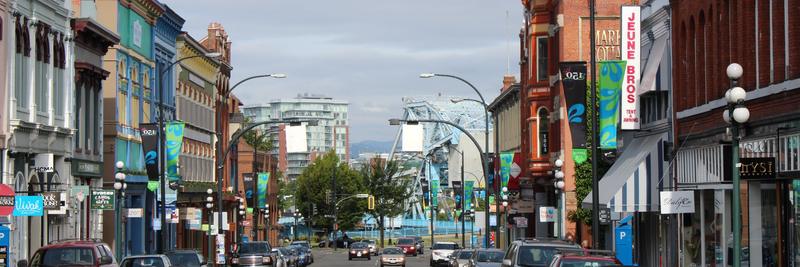
Heritage shopfronts along Johnson Street in downtown Victoria

Treatment

For you: More staffed detox and treatment beds on the South Island, with waits published monthly: help is there when someone is ready to get well. My position

more staffed detox and treatment beds on the South Island, with wait times published monthly (my position).

Secure care

For you: People in crisis on the street get into care, with medical and legal safeguards: safer for them and for everyone downtown. My position

for people with severe addiction who are a danger to themselves or others, with medical and legal safeguards (my position).

Care that keeps people alive

For you: Naloxone within reach, so an overdose can still be reversed, while the focus moves to treatment and recovery. My position

end "safe supply" and expand access to naloxone, so the focus moves to treatment and recovery while an overdose can still be reversed (my position).

Housing

For you: People move from tents into housing with support, and you'll see how many are still housed 12 months later. My position

move people from tents into housing with support, and report how many are still housed after 12 months (my position).

Courts

For you: More sheriffs and judges: cases reach trial faster, for victims and for the accused. My position

Details

add sheriffs and judges so cases reach trial faster. The courts, prosecution and sheriffs are provincial, and I'll vote to fund them. Bail is federal law, so for repeat violent offenders I'll press Ottawa for amendments (my position).

Balance

For you: Health services spread across the region instead of a few downtown blocks: easier on the neighbourhood and the businesses there. My position

spread health services across the region instead of concentrating them on a few downtown blocks, as the Downtown Victoria Business Association asks (my position).

Small business

For you: Business permit wait times published, so a local business can plan when it opens or expands. My position

work with cities to publish business permit wait times (my position).

How you'll know: scorecard lines 5, 6, 7 and 12 (people sleeping outside, toxic-drug deaths, crime in the city including repeat violent offences downtown, and treatment beds), every quarter; where a source is annual, the scorecard says so and prints a quarterly stand-in. In the same quarterly report: repeat offending, bail compliance, time to trial, treatment access, long-term recovery and downtown storefront vacancy.

Background: why, how and what it costs

Why: Downtown was left to get worse. Robberies in Victoria rose 19% in 2025 (Statistics Canada, Table 35-10-0184). In the Downtown Victoria Business Association's 2026 survey, 73% of respondents named drug use in public spaces as a top challenge, and retail vacancy downtown was 9.6%, down from 11% in 2025 (Victoria News, 20 Jun 2026). Drug policy, treatment beds and the courts are provincial decisions.

The link: businesses stay open downtown when people get treatment and housing and the street is safe. The business association is asking the Province for more detox and treatment beds and for services spread across the region (same source).

Who does what: drug law and bail are federal. Treatment, detox, supportive housing, involuntary care, prosecution, the courts and sheriffs are provincial. The City runs bylaws and, through its police board, VicPD (What the Province controls).

Staffing and funding: Beds need staff as well as buildings, so I'll vote for both the capital and the operating money (scorecard line 12). Where new staff or beds are needed, I won't invent a dollar figure; I'll publish the cost when Ministry or Island Health numbers exist.

Tracked on the scorecard: 5. Sleeping outside · 6. Toxic-drug deaths · 7. Crime in the city · 12. Treatment beds

Back to the summary

Transport and BC Ferries

What changes for you: fewer sailings between Swartz Bay and Tsawwassen lost to breakdowns, and more certainty on fares if you travel often.

Reliability

For you: A charter with clear service standards, and new leadership if they're not met: sailings you can plan around. My position

a BC Ferries Charter that sets out service and performance expectations, with new leadership sought if they aren't met (my position).

Maintenance

For you: A renewed fleet: fewer sailings between Swartz Bay and Tsawwassen lost to breakdowns. My position

renew the aging fleet through open, competitive procurement, so fewer sailings are lost to breakdowns (my position).

Executive accountability

For you: Part of executive pay depends on results, so management is paid for getting you there on time. My position

tie part of executive pay to performance results (my position).

Cancellation reporting

For you: 295 round trips cancelled in a year, 267.5 of them for mechanical problems. Every quarter, you'll see whether breakdowns fall. My position

publish cancellations on the Victoria route by cause every quarter, so mechanical breakdowns are counted separately from weather (my position).

Fares, a separate measure

For you: If you travel often, a monthly flat fee could give you more certainty on what you pay. My position

consult commuters and other frequent users on a monthly flat-fee program or other measures that give more certainty and less hassle (my position).

How you'll know: from the reports BC Ferries already publishes, not from my 12-line scorecard. Reliability: cancellations by cause and on-time performance on Tsawwassen–Swartz Bay, in BC Ferries' quarterly Sailing Statistics (counted in sailings) and its annual report to the BC Ferries Commission (counted in round trips; the Coastal Ferry Act requires it within four months of each contract year). I'll link each new report in my quarterly report. Fares: the average fare increase the BC Ferries Commissioner allows, currently capped at 3.2% a year until March 2028 (Province of B.C.).

Background and figures

Why: in the fiscal year ended March 31, 2025, BC Ferries cancelled 295 round trips on Tsawwassen–Swartz Bay: 267.5 for vessel mechanical problems, 26 for weather and 1.5 for other reasons. On-time performance on the route was 77.6% (BC Ferries annual report to the BC Ferries Commission, year ended March 31, 2025). BC Ferries wrote that the issues that come with managing an aging fleet were evident that year (same report).

Since then: from April 1 to December 31, 2025, 38 sailings were cancelled on the route, 36 of them for weather and 2 for mechanical problems. From January 1 to March 31, 2026, another 105 sailings were cancelled, 101 of them for mechanical problems (BC Ferries Sailing Statistics, April 2025 – March 2026). For the whole fiscal year ended March 31, 2026, BC Ferries' annual report counts 71.5 cancelled round trips on the route (51.5 vessel mechanical, 20 weather) and on-time performance of 83.0% (annual report to the BC Ferries Commission, year ended March 31, 2026).

Sailings and round trips are different counts: a sailing is one crossing between two terminals; a round trip is the journey from the home terminal and back. The quarterly statistics count sailings and the annual report counts round trips, so 38 sailings can't be set against 295 round trips.

Preventable disruption: weather and emergencies will always cancel some sailings. Breakdowns are where maintenance, fleet renewal and management make the difference. That is where accountability belongs.

Who decides: BC Ferries is an independent company under the Coastal Ferry Act. The Province funds routes and service levels through the Coastal Ferry Services Contract, and the BC Ferries Commissioner regulates average fare increases (Province of B.C.).

Back to the summary

Responsible spending

What changes for you: a provincial budget you can check line by line. On its own it doesn't put money in your pocket; it shows whether the tax changes on this page are paid for.

A savings register anyone can check

For you: Every saving listed line by line, and new spending matched by a cut: you can check where your tax dollars go. My position

Publish a line-by-line register of government savings that anyone can check, and match new extra spending with a cut somewhere else (my position, scorecard line 2).

Protect front-line services

For you: Health care and education are protected: savings don't come from your hospital or your child's school. My position

I won't cut health care or education to write a slogan (my position).

Move money from what isn't working

For you: Money moves from programs that don't deliver to the services you use. My position

Review government spending to find what isn't delivering results and move the money to priorities (my position).

Show what each commitment costs

For you: Where a cost has been published, it's shown next to the promise, so you can judge whether it's worth it. My position

Show what each commitment on this page costs where a published figure exists, and say so where none does (my position).

No vote for hidden cuts or tax hikes

For you: No vote from me for a bill that hides its cuts or raises a tax rate. My position

Vote against a bill that doesn't say what it cuts, or that raises a tax rate (my position, scorecard promise 2).

How you'll know: scorecard line 2, every quarter, from the government's Quarterly Reports, and each year from the Public Accounts.

Background: why, how and what it costs

Where things stand: the First Quarterly Report projects a $13.8 billion deficit for 2026-27 (B.C. Ministry of Finance, 14 Sep 2026). Budget 2026 books $3.5 billion of "expenditure management" savings over the fiscal plan (Budget and Fiscal Plan 2026/27, Table 1), but there is no public, line-by-line register a voter can check.

What the commitments cost: restoring the 5.06% rate and indexing has no published cost yet, and I won't print one of my own (scorecard line 1).

Back to the summary

Also for this riding

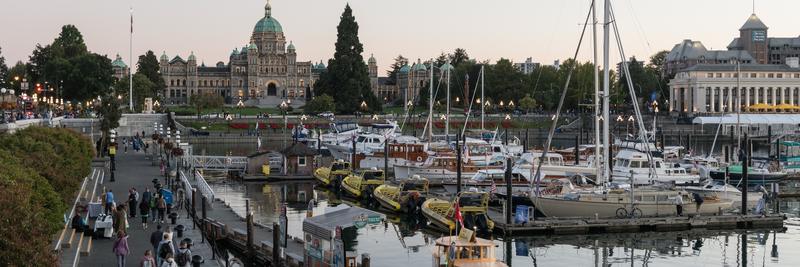
Inner Harbour marina at dusk, with the Parliament Buildings behind

James Bay

For you: 310 cruise ship calls in 2025 at Ogden Point: a cruise-day plan for traffic, buses and safe crossings in James Bay. My position

Details and sources (1)

a cruise-day plan for traffic, buses and pedestrian safety, made with the City, the Harbour Authority and residents (my position). Ogden Point had 310 cruise ship calls in 2025 (Greater Victoria Harbour Authority, Oct 2025).

Public servants

For you: Published service standards, changes based on data, and staff told early: more certainty for public servants and the families who live here. My position

Details and sources (1)

almost half of B.C.'s public service works in Victoria (Government of B.C., figures as of June 2020). I'll push for published service standards, and for any change to be based on data, with staff told early (my position).

Back to the summary

How I'll report to you

A number on every promise. A report every quarter.

Every quarter, I'll publish what was promised, what was done and what it cost. The scorecard comes out within 30 days of each quarter-end.

Tracked on the scorecard: 11. The riding office, on a clock

Back to the summary

Last updated: